

Bilingual
En/Fa
Geographical Research is Published in both Persian and English Full-text.
Volume 40, Issue 4 (2025)
GeoRes 2025, 40(4): 371-379 |
Back to browse issues page
Article Type:
Subject:


History
Received: 2025/10/28 | Accepted: 2025/12/21 | Published: 2025/12/1
Received: 2025/10/28 | Accepted: 2025/12/21 | Published: 2025/12/1
How to cite this article
Sonbolestanian S, Tahmas Nezhad M. (2025). Role of Urban Services from the Perspective of Citizens in the Urban Prosperity Process of Isfahan Metropolis. GeoRes. 40(4), 371-379. doi:10.58209/geores.40.4.371
URL: http://georesearch.ir/article-1-1876-en.html
URL: http://georesearch.ir/article-1-1876-en.html
Download citation:
BibTeX | RIS | EndNote | Medlars | ProCite | Reference Manager | RefWorks
Send citation to:


Rights and permissions
BibTeX | RIS | EndNote | Medlars | ProCite | Reference Manager | RefWorks
Send citation to:


1- Department of Management, Faculty of Humanities, Dehaghan Campus (Deh.C.), Islamic Azad University, Isfahan, Iran
2- Tourism Research Center, Faculty of Humanities, Najafabad Campus (Na.C.), Islamic Azad University, Najafabad, Iran
2- Tourism Research Center, Faculty of Humanities, Najafabad Campus (Na.C.), Islamic Azad University, Najafabad, Iran
Full-Text (HTML) (2 Views)
1. Background
In recent decades, global experience has shown that rapid urban population growth, physical urban expansion, and the ever-increasing complexity of citizens' needs have posed widespread challenges to urban management systems. In metropolises especially, pressure on urban services has increased, and how cities respond to these needs decisively affects citizens' quality of life. Urban services include public transport, water and wastewater supply, healthcare, education, waste management, green spaces, cultural and welfare services, and other urban infrastructure. When these services are delivered coherently, with high quality and responsiveness, they can drive urban prosperity.
Isfahan, one of Iran's largest and most influential metropolises, has experienced population growth, urban spatial expansion, and social transformations in recent decades. Despite extensive investments in infrastructure and urban services, significant differences in service quality across city districts and the uneven distribution of services remain fundamental challenges. This situation can deepen urban inequalities, reduce public satisfaction, and slow urban development.
One important global theoretical and practical framework for evaluating cities' overall condition is the City Prosperity Initiative (CPI), designed by the United Nations Human Settlements Program. This tool focuses on dimensions such as infrastructure, productivity, quality of life, equity, governance, and sustainability, and aims to provide a comprehensive picture of urban prosperity [UN-Habitat, 2013]. In this approach, urban prosperity becomes a multidimensional concept; a concept that goes beyond mere economic growth and encompasses social, environmental, governance, and equity aspects. In contemporary urban planning literature, urban prosperity is increasingly understood as more than economic growth, based on quality of life, social justice, and sustainability [Campbell, 2016]. This approach emphasizes that urban development is meaningful when it simultaneously improves the city's material, social, and institutional conditions [Parnell & Robinson, 2012]. Urban services are among the most important tools for achieving urban prosperity and play a fundamental role in citizens' lived experience [Lynch, 2014]. The quality and accessibility of urban services can directly affect citizens' satisfaction and sense of belonging to the city [Pacione, 2003]. Inequality in the distribution of urban services is a key factor in reproducing spatial and social inequalities in cities [Harvey, 2010]. Spatial justice is a key pillar of urban prosperity [Marcuse, 2009]. Urban governance plays a decisive role in the efficiency of urban service systems [Healey, 2005]. Modern urban governance theories emphasize stakeholder participation and transparency in decision-making [Ansell & Gash, 2008]. Cities with participatory governance are more successful in providing urban services [Sellers & Lidström, 2007]. Resilient urban infrastructure is a necessary condition for the sustainability of urban prosperity [Meerow et al., 2016]. The link between urban services and environmental sustainability is central to new theories of urban development [Elmqvist et al., 2019].
The central research question is: To what extent have urban services achieved urban prosperity in Isfahan, and which dimensions of urban services most affect different aspects of prosperity? The main objective of this research was to explain the relationship between urban services and urban prosperity in the Isfahan metropolis.
2. Previous Studies
Various domestic and foreign studies on urban services and urban prosperity were reviewed:
Rezaei et al. (2025) showed that the distribution of urban services in Mashhad does not align with the principles of spatial justice, and existing spatial inequalities threaten social welfare and urban sustainability. Kakavand et al. (2025) found that overall prosperity levels across Tehran's districts fall within the weak-to-moderate range. Some studies emphasize that the uneven distribution of urban services, weak infrastructure, low-quality services, and limited citizen participation hinder the realization of urban prosperity in Iranian cities [Asadi & Ahadnejad Roshti, 2025]. Babaei Eliasi et al. (2025) found that Rasht is not in a suitable condition in terms of urban prosperity and liveability indices. The study also found a significant relationship between prosperity and liveability. In a study, Abbasi (2022) concluded that prosperity indicators in Khorramabad are moderate. In contrast, urban sustainability indicators were also evaluated at approximately a moderate level. In a study in Tehran, Ghasemi (2024) found a positive and significant relationship between the equitable distribution of urban services and urban prosperity. Rezaali et al. (2020) showed that the city follows a concentrated prosperity pattern, in which economic and social indicators are mainly concentrated in central districts. This pattern indicates spatial inequality across the city's districts. In a study in Urmia, Habibpour et al. (2025) examined the components of urban prosperity and their relationship with urban services; the results showed that some neighborhoods have a higher urban prosperity status, while other areas need improvement. Clay (2023) found that focusing on strengths, opportunities, aspirations, and results can engage urban managers and community members in creating prosperity pathways, emphasizing stakeholder participation and a systemic view. Narayanan et al. (2021) found that factors such as income, access to public services, housing provision, and natural infrastructure positively and significantly affect urban sustainability; in contrast, high crime rates significantly reduce the quality of urban life. This study revealed a positive correlation between prosperity and social welfare in Indian cities. In a study of 64 major world cities, Bakker et al. (2021) found a weak but significant relationship between urban prosperity and urban land consumption. Daneshpour et al. (2020) examined the components of the urban prosperity index in Shiraz using structural equation modeling. The World Cities Report showed that cities that perform well across various dimensions of urban prosperity also provide better urban services [UN-Habitat, 2013].
However, many domestic studies have examined urban services more through the lens of physical distribution and have less systematically explored the conceptual and empirical link between the quality and function of urban services and urban prosperity at the metropolitan scale. The existing research gap shows that the causal and simultaneous relationship between the quantitative and qualitative dimensions of urban services and multidimensional urban prosperity indicators, especially in Iranian cities, has not yet been comprehensively analyzed.
3. Aim(s)
This study aimed to evaluate the role of urban services in the urban prosperity process in the Isfahan metropolis and identify the dimensions that most strongly promote urban prosperity. In this regard, the relationship between the quality of urban services and the status of urban prosperity in different areas of the city was examined, and the key dimensions affecting prosperity were identified.
4. Research Type
The present study, conducted in 2025, used a combined quantitative-qualitative approach among citizens in the Isfahan metropolis.
5. Research Society, Place and Time
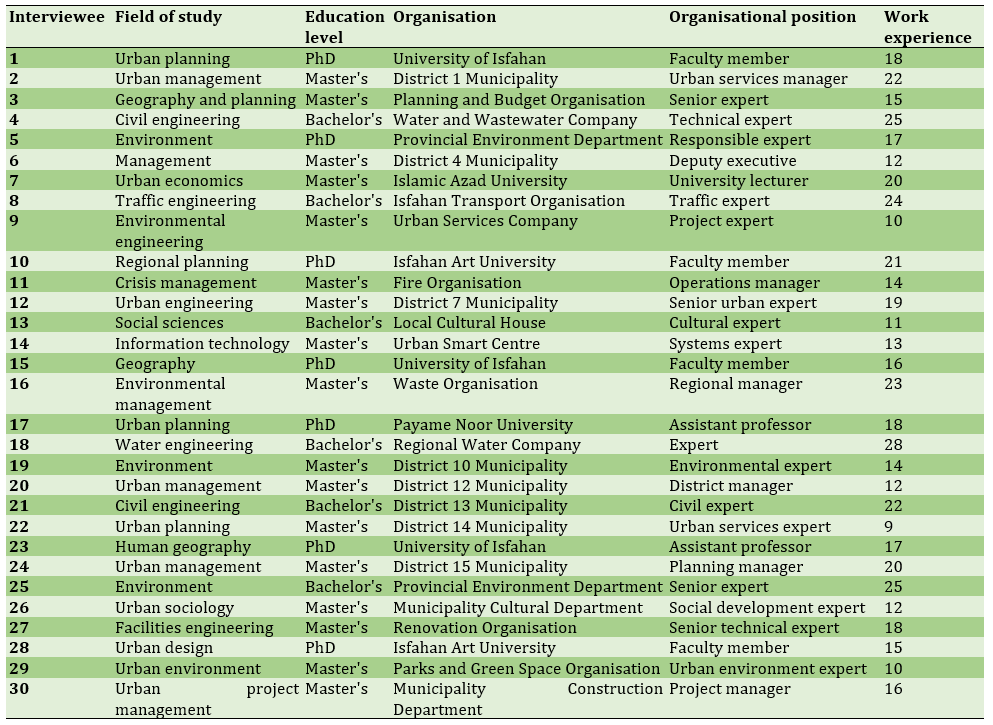
The present study was conducted with a combined quantitative-qualitative approach in 2025 among the citizens of the Isfahan metropolis. Thirty experts in urban management, urban planning, urban services, and sustainable development from 15 districts of the Isfahan metropolis (two per district) participated in the face and content validity review (Table 2).
6. Sampling Method and Number
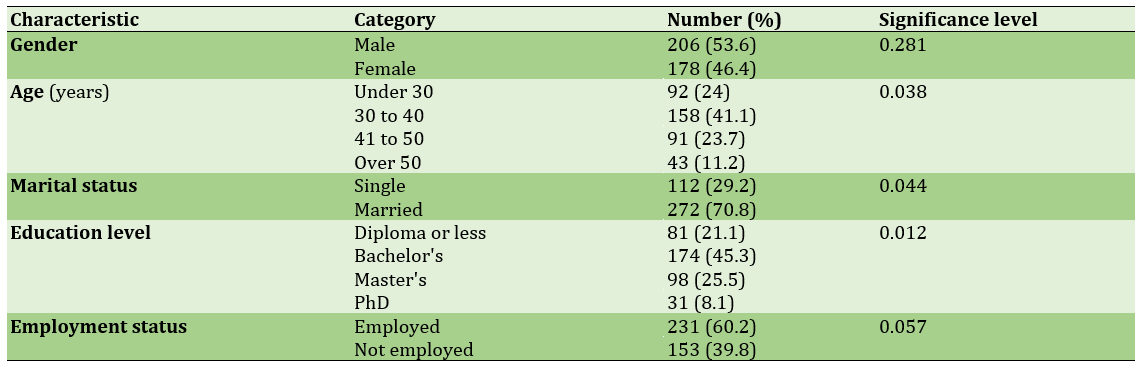
We estimated the sample size at 384 people using Cochran's formula. To account for attrition and incomplete questionnaires, 430 questionnaires were randomly distributed across different areas of the city. Participants' mean age was 38.29±6.71 years, and 206 (53.6%) were male (Table 4).
Table 4. Demographic characteristics of the study samples (n=384)
7. Used Devices & Materials
The data collection tool was a research-made questionnaire. First, through a systematic review of theoretical literature on urban prosperity and urban services, especially the United Nations Human Settlements Program framework and previous domestic and international studies, the initial dimensions and indicators were identified, and the main components of urban services were extracted. Based on these results, the researchers formulated the questionnaire items within the study's main dimensions. The final questionnaire included 84 closed items across two sections: urban services (12 components) and urban prosperity (6 components), using a five-point Likert scale from "completely disagree" to "completely agree" to measure respondents' attitudes toward the status of urban services. A higher mean indicates a more favorable status of urban services and urban prosperity. To assess content and face validity, the initial version of the questionnaire was provided to 30 specialists and, based on their feedback, some items were corrected or deleted for conceptual clarity, relevance to the research objective, and to avoid overlap. The reliability of the structures was confirmed with Cronbach's alpha and composite reliability indices. Finally, the questionnaire was used as the final instrument for quantitative data collection after making the necessary corrections.
The resulting data were entered into SPSS 22 and analyzed using structural equation modeling (SEM). Multivariate regression was used to examine the predictive role of urban service components on urban prosperity.
8. Findings
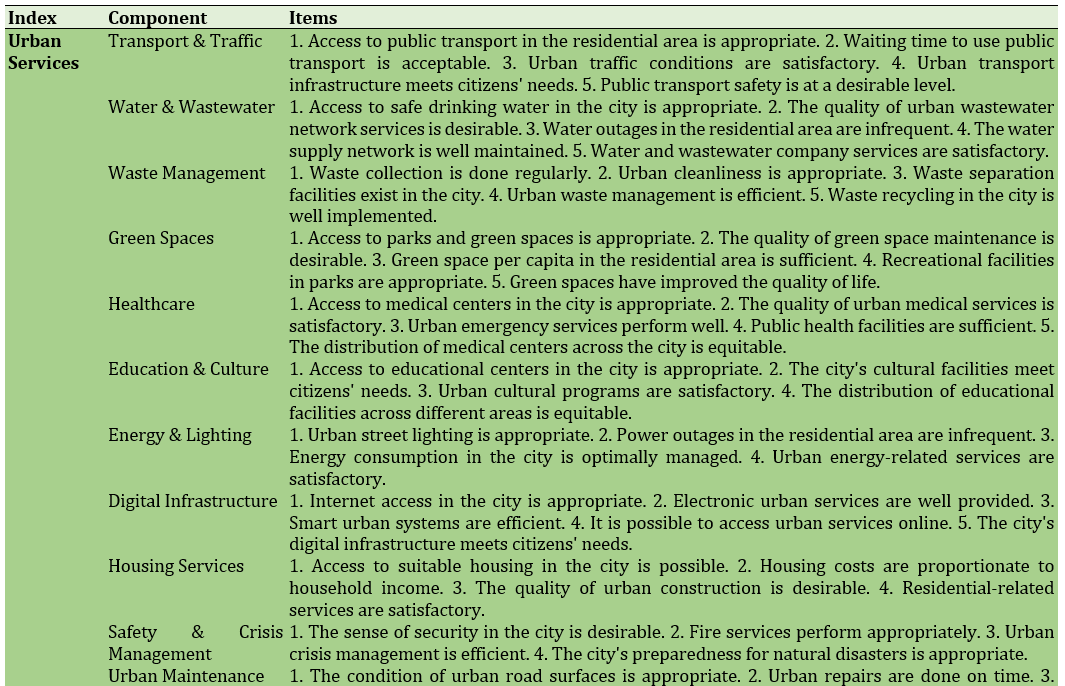
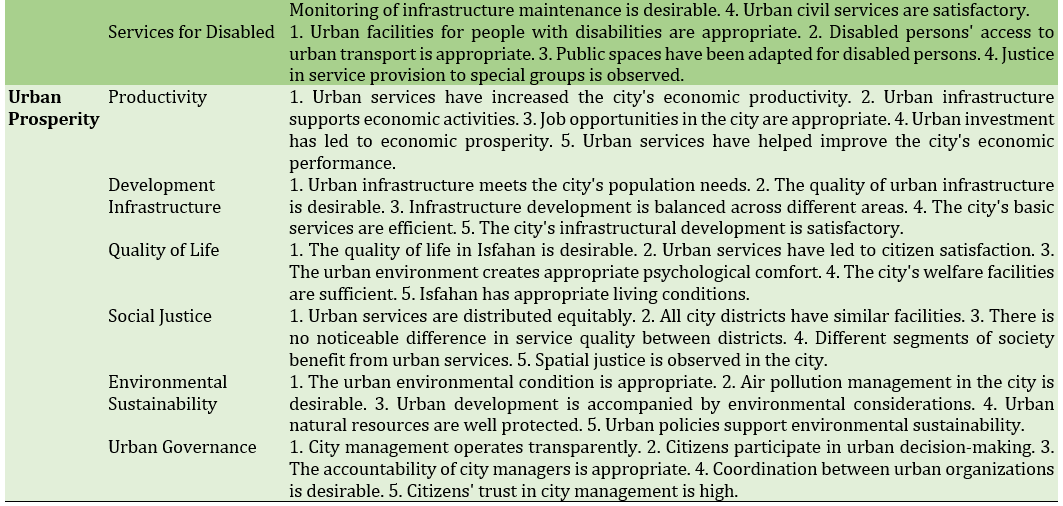
Documentary studies informed the initial questionnaire, which comprised 18 components and 84 items (Table 1).
Table 1. Components and items of the initial questionnaire extracted from documentary studies
In the urban services components, consensus was highest for public transport, water and wastewater, health services, and waste management. Consensus was lowest for the smart city and housing components. In the urban components, consensus was highest for 'development infrastructure' and lowest for 'urban governance' (Table 3).
Table 3. Content validity results of the initial questionnaire by experts
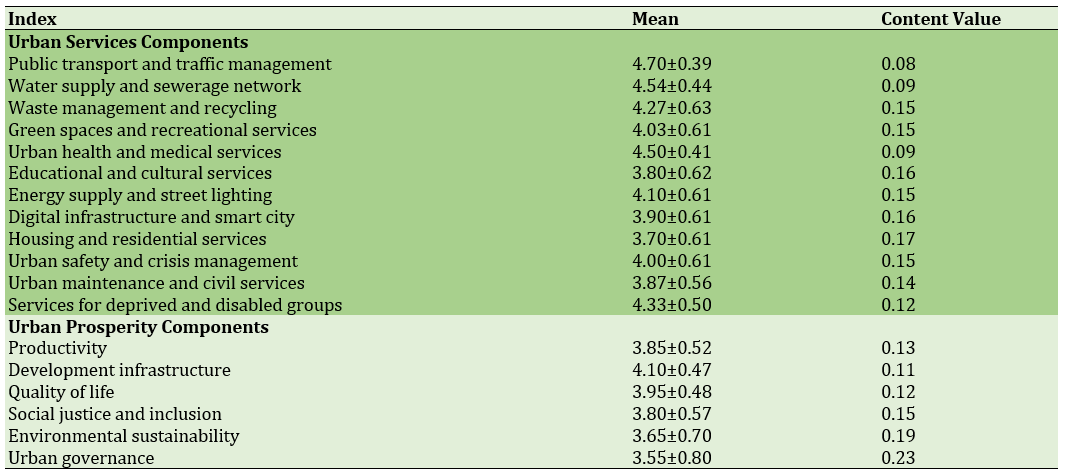
Table 2. Demographic characteristics of participating experts
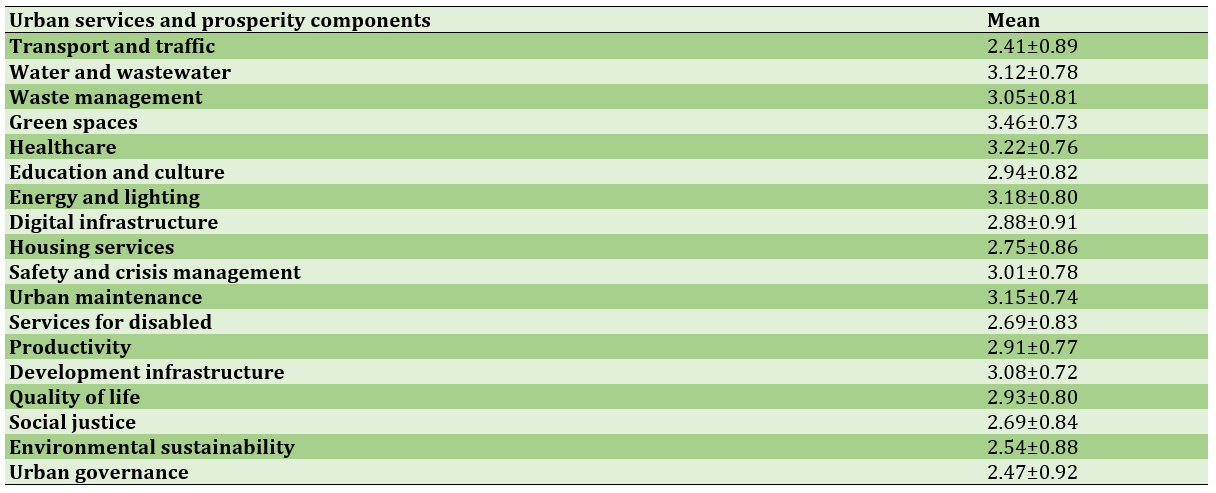
The mean scores for different urban service components, from the perspective of citizens of the Isfahan metropolis, ranged from 2.41 to 3.46. Among the urban service components, citizens rated green spaces highest, while services for the disabled, housing services, and digital infrastructure received the lowest scores. Among urban prosperity components, urban infrastructure had the highest score, while urban governance and environmental sustainability were evaluated at the lowest levels (Table 5).
Table 5. Descriptive statistics of urban services and urban prosperity components
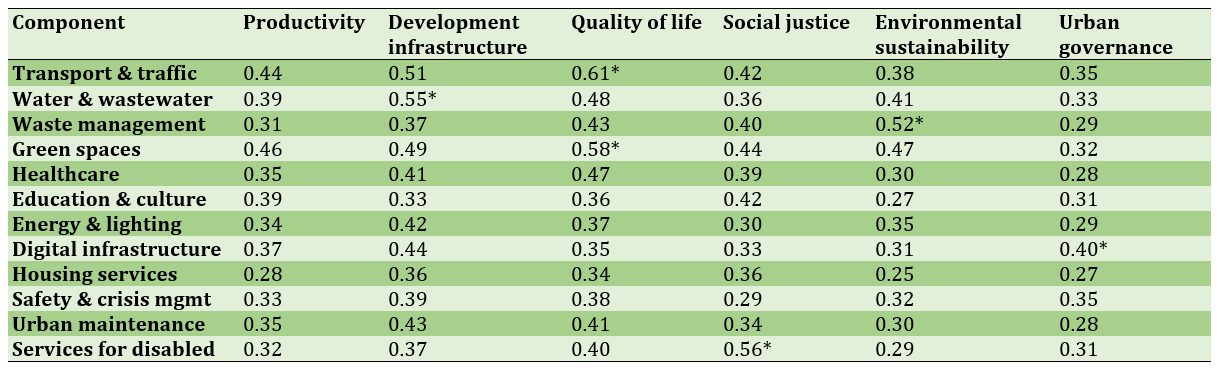
Correlation coefficients between transport and quality of life (r=0.61; p<0.01), green spaces and quality of life (r=0.58; p<0.01), water and wastewater and development infrastructure (r=0.55; p<0.01), waste management and environmental sustainability (r=0.52; p<0.01), services for disabled and social justice (r=0.56; p<0.01), and digital infrastructure and urban governance (r=0.40; p<0.01) were significant (Table 6).
Table 6. Complete correlation matrix between urban service components and prosperity dimensions (* significant at 0.01 level)
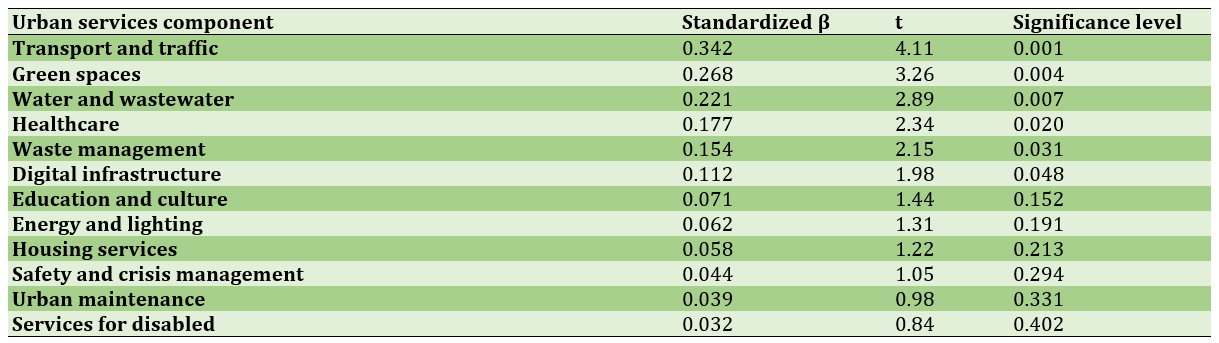
Transport, green spaces, and water and wastewater had the greatest impact on explaining urban prosperity. Some components such as education and culture, energy, housing services, and safety did not show a significant effect (Table 7).
Table 7. Multivariate regression results for predicting urban prosperity
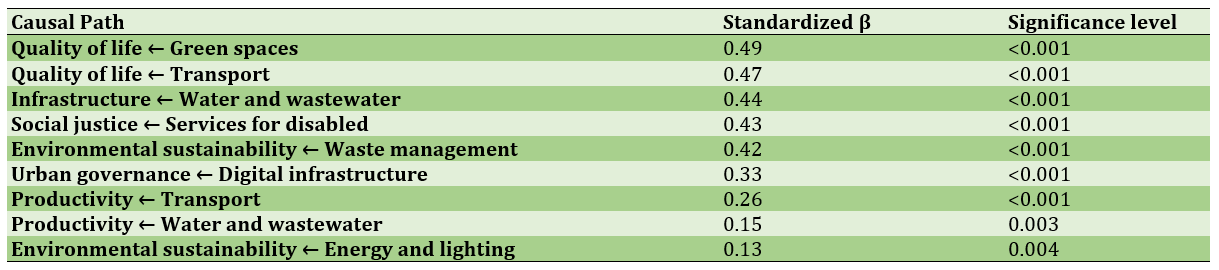
Green spaces and transport had the strongest direct effect on quality of life. Water and wastewater also had the greatest impact on the urban infrastructure index. Waste management was also the most important factor influencing environmental sustainability (Table 8).
Table 8. Complete path analysis results
9. Main Comparisons to Similar Studies
The relationship between urban services and urban prosperity in the Isfahan metropolis was assessed as following a multidimensional, unequal pattern strongly influenced by governance structure and infrastructural capacity. The results confirmed that urban services directly and significantly affect urban prosperity, and that infrastructural, governance, and spatial justice components play the greatest role in explaining the prosperity path.
In the infrastructure dimension, the structural equation modeling results showed that 'service infrastructure quality' has the lowest satisfaction level among urban service dimensions and its effect on prosperity is strong and significant. This finding aligns with studies by Asadi and Ahadnejad Roshti (2025) and Narayanan et al. (2021), who identified weak infrastructure as a key barrier to urban prosperity. Babaei Eliasi et al. (2025) also found that inefficient infrastructure services can reduce quality of life and urban productivity.
In the urban quality-of-life domain, the quantitative analysis showed that indicators related to urban satisfaction, environmental security, green space per capita, and access to social services have high factor loadings in the prosperity model. These findings align with Narayanan et al. (2021) and Babaei Eliasi et al. (2025), who emphasized the role of urban justice, public services, and security in shaping quality of life and prosperity. The concentration of services and facilities in Isfahan's central districts follows the same pattern that Rezaali et al. (2020) also observed in Tehran.
In the spatial justice dimension, the quantitative results showed that service equity is one of the strongest predictors of urban prosperity, and that districts in Isfahan differ significantly. These results align with studies by Rezaei et al. (2025) in Mashhad and Ghasemi (2024) in Tehran, which identified spatial inequality as a serious threat to urban prosperity. Isfahan shows the same pattern, and spatial disparities in the distribution of urban services structurally hinder sustainable prosperity.
In environmental sustainability, quantitative findings confirm that indicators such as air quality, resource consumption sustainability, and waste management efficiency significantly affect prosperity. These findings align with Bakker et al. (2021) and Narayanan et al. (2021), who identified the urban environment and land consumption as key determinants of the path to prosperity. In Isfahan, environmental challenges are so intense that even with improved urban services, sustainable prosperity cannot be achieved without reforming environmental structures.
In the governance dimension, the quantitative analysis showed that urban governance and indicators such as institutional integration, transparency, managerial stability, and citizen participation have a considerable effect on prosperity. These results align with Clay (2023) and Asadi and Ahadnejad Roshti (2025), who identified participatory governance and transparency as prerequisites for urban prosperity. More importantly, the structural equation modeling findings also showed that governance mediates the relationship between service quality, spatial justice, and urban prosperity, a finding the qualitative results also confirmed.
Overall, the Isfahan metropolis shows weak to moderate urban prosperity in many areas, consistent with Kakavand et al. (2025), Abbasi (2022), and Babaei Eliasi et al. (2025) in other Iranian metropolises. This consistency confirms that Iran's urban prosperity pattern is unequal and multi-centric, and depends heavily on service quality and governance mechanisms.
This research has several important theoretical implications for the literature on urban services and urban prosperity. First, the findings show that the relationship between urban services and urban prosperity in the Iranian context follows a three-dimensional pattern that includes infrastructural capacity, spatial justice, and governance mechanisms; although scattered in the global literature, this pattern has been less empirically tested in domestic research. The structural equation model showed that urban services not only directly affect prosperity but also strengthen it indirectly through governance and spatial justice. This pattern aligns with the theoretical frameworks of Narayanan et al. (2021), Bakker et al. (2021), and Clay (2023), and the present research confirms and extends it in the Iranian context using field data. Second, the findings show that urban prosperity in Iran is multi-centric and unequal, and depends heavily on the quality of public services. Unlike economic-centered approaches, this research emphasizes that in Iranian cities, prosperity depends more on the quality and equity of access to basic services, security, quality of life, environmental resilience, and institutional integration than on economic indicators. This result can steer the theoretical framework of urban prosperity in Iran from a focus solely on urban economics towards a 'service-oriented and justice-oriented model of prosperity'. Third, the findings highlight the decisive role of participatory governance in urban prosperity. The structural equation modeling results showed that the link between governance and prosperity was one of the model's strongest paths. This result implies that governance is not only a 'contextual factor' but also an 'activating factor' of urban prosperity, and without governance reform, improving urban services and infrastructure also cannot create a desirable level of prosperity.
10. Suggestions & Limitations
Based on the research results and analysis of the state of urban services and urban prosperity in the Isfahan metropolis, the following suggestions are presented in a concise and actionable manner:
1. Isfahan's urban management should, with a justice-centered approach, readjust the distribution of services and allocation of resources in favor of underserved areas and institutionalize a continuous monitoring system of spatial justice in urban planning.
2. The renovation and improvement of critical urban infrastructure, especially in the field of public transport, water and wastewater networks, and waste management, as a prerequisite for promoting urban prosperity, should be pursued within the framework of a comprehensive resilience program.
3. Strengthening participatory governance through the transition from symbolic to genuine citizen participation, increasing institutional transparency, and improving inter-sectoral coordination in urban management is essential.
4. Urban services should move away from a minimalist approach and be redesigned with a development-oriented and empowering approach, towards improving quality of life and urban prosperity.
5. The formulation of a strategic urban prosperity plan for the Isfahan metropolis, based on valid indicators and with an emphasis on spatial justice, service integration, and participatory governance, is recommended.
11. Conclusion
Urban services play a direct and significant role in explaining urban prosperity in the Isfahan metropolis, and infrastructural dimensions, spatial justice, and urban governance are the most important influencing factors. Urban prosperity in Isfahan is unequal and multidimensional, and without simultaneous improvements in service quality, equitable distribution, and stronger participatory governance, sustainable promotion will not be possible.
Acknowledgments
Nothing has been reported by the authors.
Ethical Permission
Nothing has been reported by the authors.
Conflict of Interest
Nothing has been reported by the authors.
Authors' Contributions
Seyed Shahram Sonbolestanian (First Author): Introduction writer/Methodologist/Statistical analyst/Discussion writer (50%); Mahin Tahmasnezhad (Second Author): Introduction writer/Methodologist/Statistical analyst/Discussion writer (50%).
Funding/Support
This research was conducted at the personal expense of the authors.
In recent decades, global experience has shown that rapid urban population growth, physical urban expansion, and the ever-increasing complexity of citizens' needs have posed widespread challenges to urban management systems. In metropolises especially, pressure on urban services has increased, and how cities respond to these needs decisively affects citizens' quality of life. Urban services include public transport, water and wastewater supply, healthcare, education, waste management, green spaces, cultural and welfare services, and other urban infrastructure. When these services are delivered coherently, with high quality and responsiveness, they can drive urban prosperity.
Isfahan, one of Iran's largest and most influential metropolises, has experienced population growth, urban spatial expansion, and social transformations in recent decades. Despite extensive investments in infrastructure and urban services, significant differences in service quality across city districts and the uneven distribution of services remain fundamental challenges. This situation can deepen urban inequalities, reduce public satisfaction, and slow urban development.
One important global theoretical and practical framework for evaluating cities' overall condition is the City Prosperity Initiative (CPI), designed by the United Nations Human Settlements Program. This tool focuses on dimensions such as infrastructure, productivity, quality of life, equity, governance, and sustainability, and aims to provide a comprehensive picture of urban prosperity [UN-Habitat, 2013]. In this approach, urban prosperity becomes a multidimensional concept; a concept that goes beyond mere economic growth and encompasses social, environmental, governance, and equity aspects. In contemporary urban planning literature, urban prosperity is increasingly understood as more than economic growth, based on quality of life, social justice, and sustainability [Campbell, 2016]. This approach emphasizes that urban development is meaningful when it simultaneously improves the city's material, social, and institutional conditions [Parnell & Robinson, 2012]. Urban services are among the most important tools for achieving urban prosperity and play a fundamental role in citizens' lived experience [Lynch, 2014]. The quality and accessibility of urban services can directly affect citizens' satisfaction and sense of belonging to the city [Pacione, 2003]. Inequality in the distribution of urban services is a key factor in reproducing spatial and social inequalities in cities [Harvey, 2010]. Spatial justice is a key pillar of urban prosperity [Marcuse, 2009]. Urban governance plays a decisive role in the efficiency of urban service systems [Healey, 2005]. Modern urban governance theories emphasize stakeholder participation and transparency in decision-making [Ansell & Gash, 2008]. Cities with participatory governance are more successful in providing urban services [Sellers & Lidström, 2007]. Resilient urban infrastructure is a necessary condition for the sustainability of urban prosperity [Meerow et al., 2016]. The link between urban services and environmental sustainability is central to new theories of urban development [Elmqvist et al., 2019].
The central research question is: To what extent have urban services achieved urban prosperity in Isfahan, and which dimensions of urban services most affect different aspects of prosperity? The main objective of this research was to explain the relationship between urban services and urban prosperity in the Isfahan metropolis.
2. Previous Studies
Various domestic and foreign studies on urban services and urban prosperity were reviewed:
Rezaei et al. (2025) showed that the distribution of urban services in Mashhad does not align with the principles of spatial justice, and existing spatial inequalities threaten social welfare and urban sustainability. Kakavand et al. (2025) found that overall prosperity levels across Tehran's districts fall within the weak-to-moderate range. Some studies emphasize that the uneven distribution of urban services, weak infrastructure, low-quality services, and limited citizen participation hinder the realization of urban prosperity in Iranian cities [Asadi & Ahadnejad Roshti, 2025]. Babaei Eliasi et al. (2025) found that Rasht is not in a suitable condition in terms of urban prosperity and liveability indices. The study also found a significant relationship between prosperity and liveability. In a study, Abbasi (2022) concluded that prosperity indicators in Khorramabad are moderate. In contrast, urban sustainability indicators were also evaluated at approximately a moderate level. In a study in Tehran, Ghasemi (2024) found a positive and significant relationship between the equitable distribution of urban services and urban prosperity. Rezaali et al. (2020) showed that the city follows a concentrated prosperity pattern, in which economic and social indicators are mainly concentrated in central districts. This pattern indicates spatial inequality across the city's districts. In a study in Urmia, Habibpour et al. (2025) examined the components of urban prosperity and their relationship with urban services; the results showed that some neighborhoods have a higher urban prosperity status, while other areas need improvement. Clay (2023) found that focusing on strengths, opportunities, aspirations, and results can engage urban managers and community members in creating prosperity pathways, emphasizing stakeholder participation and a systemic view. Narayanan et al. (2021) found that factors such as income, access to public services, housing provision, and natural infrastructure positively and significantly affect urban sustainability; in contrast, high crime rates significantly reduce the quality of urban life. This study revealed a positive correlation between prosperity and social welfare in Indian cities. In a study of 64 major world cities, Bakker et al. (2021) found a weak but significant relationship between urban prosperity and urban land consumption. Daneshpour et al. (2020) examined the components of the urban prosperity index in Shiraz using structural equation modeling. The World Cities Report showed that cities that perform well across various dimensions of urban prosperity also provide better urban services [UN-Habitat, 2013].
However, many domestic studies have examined urban services more through the lens of physical distribution and have less systematically explored the conceptual and empirical link between the quality and function of urban services and urban prosperity at the metropolitan scale. The existing research gap shows that the causal and simultaneous relationship between the quantitative and qualitative dimensions of urban services and multidimensional urban prosperity indicators, especially in Iranian cities, has not yet been comprehensively analyzed.
3. Aim(s)
This study aimed to evaluate the role of urban services in the urban prosperity process in the Isfahan metropolis and identify the dimensions that most strongly promote urban prosperity. In this regard, the relationship between the quality of urban services and the status of urban prosperity in different areas of the city was examined, and the key dimensions affecting prosperity were identified.
4. Research Type
The present study, conducted in 2025, used a combined quantitative-qualitative approach among citizens in the Isfahan metropolis.
5. Research Society, Place and Time
The present study was conducted with a combined quantitative-qualitative approach in 2025 among the citizens of the Isfahan metropolis. Thirty experts in urban management, urban planning, urban services, and sustainable development from 15 districts of the Isfahan metropolis (two per district) participated in the face and content validity review (Table 2).
6. Sampling Method and Number
We estimated the sample size at 384 people using Cochran's formula. To account for attrition and incomplete questionnaires, 430 questionnaires were randomly distributed across different areas of the city. Participants' mean age was 38.29±6.71 years, and 206 (53.6%) were male (Table 4).
Table 4. Demographic characteristics of the study samples (n=384)
7. Used Devices & Materials
The data collection tool was a research-made questionnaire. First, through a systematic review of theoretical literature on urban prosperity and urban services, especially the United Nations Human Settlements Program framework and previous domestic and international studies, the initial dimensions and indicators were identified, and the main components of urban services were extracted. Based on these results, the researchers formulated the questionnaire items within the study's main dimensions. The final questionnaire included 84 closed items across two sections: urban services (12 components) and urban prosperity (6 components), using a five-point Likert scale from "completely disagree" to "completely agree" to measure respondents' attitudes toward the status of urban services. A higher mean indicates a more favorable status of urban services and urban prosperity. To assess content and face validity, the initial version of the questionnaire was provided to 30 specialists and, based on their feedback, some items were corrected or deleted for conceptual clarity, relevance to the research objective, and to avoid overlap. The reliability of the structures was confirmed with Cronbach's alpha and composite reliability indices. Finally, the questionnaire was used as the final instrument for quantitative data collection after making the necessary corrections.
The resulting data were entered into SPSS 22 and analyzed using structural equation modeling (SEM). Multivariate regression was used to examine the predictive role of urban service components on urban prosperity.
8. Findings
Documentary studies informed the initial questionnaire, which comprised 18 components and 84 items (Table 1).
Table 1. Components and items of the initial questionnaire extracted from documentary studies
In the urban services components, consensus was highest for public transport, water and wastewater, health services, and waste management. Consensus was lowest for the smart city and housing components. In the urban components, consensus was highest for 'development infrastructure' and lowest for 'urban governance' (Table 3).
Table 3. Content validity results of the initial questionnaire by experts
Table 2. Demographic characteristics of participating experts
The mean scores for different urban service components, from the perspective of citizens of the Isfahan metropolis, ranged from 2.41 to 3.46. Among the urban service components, citizens rated green spaces highest, while services for the disabled, housing services, and digital infrastructure received the lowest scores. Among urban prosperity components, urban infrastructure had the highest score, while urban governance and environmental sustainability were evaluated at the lowest levels (Table 5).
Table 5. Descriptive statistics of urban services and urban prosperity components
Correlation coefficients between transport and quality of life (r=0.61; p<0.01), green spaces and quality of life (r=0.58; p<0.01), water and wastewater and development infrastructure (r=0.55; p<0.01), waste management and environmental sustainability (r=0.52; p<0.01), services for disabled and social justice (r=0.56; p<0.01), and digital infrastructure and urban governance (r=0.40; p<0.01) were significant (Table 6).
Table 6. Complete correlation matrix between urban service components and prosperity dimensions (* significant at 0.01 level)
Transport, green spaces, and water and wastewater had the greatest impact on explaining urban prosperity. Some components such as education and culture, energy, housing services, and safety did not show a significant effect (Table 7).
Table 7. Multivariate regression results for predicting urban prosperity
Green spaces and transport had the strongest direct effect on quality of life. Water and wastewater also had the greatest impact on the urban infrastructure index. Waste management was also the most important factor influencing environmental sustainability (Table 8).
Table 8. Complete path analysis results
9. Main Comparisons to Similar Studies
The relationship between urban services and urban prosperity in the Isfahan metropolis was assessed as following a multidimensional, unequal pattern strongly influenced by governance structure and infrastructural capacity. The results confirmed that urban services directly and significantly affect urban prosperity, and that infrastructural, governance, and spatial justice components play the greatest role in explaining the prosperity path.
In the infrastructure dimension, the structural equation modeling results showed that 'service infrastructure quality' has the lowest satisfaction level among urban service dimensions and its effect on prosperity is strong and significant. This finding aligns with studies by Asadi and Ahadnejad Roshti (2025) and Narayanan et al. (2021), who identified weak infrastructure as a key barrier to urban prosperity. Babaei Eliasi et al. (2025) also found that inefficient infrastructure services can reduce quality of life and urban productivity.
In the urban quality-of-life domain, the quantitative analysis showed that indicators related to urban satisfaction, environmental security, green space per capita, and access to social services have high factor loadings in the prosperity model. These findings align with Narayanan et al. (2021) and Babaei Eliasi et al. (2025), who emphasized the role of urban justice, public services, and security in shaping quality of life and prosperity. The concentration of services and facilities in Isfahan's central districts follows the same pattern that Rezaali et al. (2020) also observed in Tehran.
In the spatial justice dimension, the quantitative results showed that service equity is one of the strongest predictors of urban prosperity, and that districts in Isfahan differ significantly. These results align with studies by Rezaei et al. (2025) in Mashhad and Ghasemi (2024) in Tehran, which identified spatial inequality as a serious threat to urban prosperity. Isfahan shows the same pattern, and spatial disparities in the distribution of urban services structurally hinder sustainable prosperity.
In environmental sustainability, quantitative findings confirm that indicators such as air quality, resource consumption sustainability, and waste management efficiency significantly affect prosperity. These findings align with Bakker et al. (2021) and Narayanan et al. (2021), who identified the urban environment and land consumption as key determinants of the path to prosperity. In Isfahan, environmental challenges are so intense that even with improved urban services, sustainable prosperity cannot be achieved without reforming environmental structures.
In the governance dimension, the quantitative analysis showed that urban governance and indicators such as institutional integration, transparency, managerial stability, and citizen participation have a considerable effect on prosperity. These results align with Clay (2023) and Asadi and Ahadnejad Roshti (2025), who identified participatory governance and transparency as prerequisites for urban prosperity. More importantly, the structural equation modeling findings also showed that governance mediates the relationship between service quality, spatial justice, and urban prosperity, a finding the qualitative results also confirmed.
Overall, the Isfahan metropolis shows weak to moderate urban prosperity in many areas, consistent with Kakavand et al. (2025), Abbasi (2022), and Babaei Eliasi et al. (2025) in other Iranian metropolises. This consistency confirms that Iran's urban prosperity pattern is unequal and multi-centric, and depends heavily on service quality and governance mechanisms.
This research has several important theoretical implications for the literature on urban services and urban prosperity. First, the findings show that the relationship between urban services and urban prosperity in the Iranian context follows a three-dimensional pattern that includes infrastructural capacity, spatial justice, and governance mechanisms; although scattered in the global literature, this pattern has been less empirically tested in domestic research. The structural equation model showed that urban services not only directly affect prosperity but also strengthen it indirectly through governance and spatial justice. This pattern aligns with the theoretical frameworks of Narayanan et al. (2021), Bakker et al. (2021), and Clay (2023), and the present research confirms and extends it in the Iranian context using field data. Second, the findings show that urban prosperity in Iran is multi-centric and unequal, and depends heavily on the quality of public services. Unlike economic-centered approaches, this research emphasizes that in Iranian cities, prosperity depends more on the quality and equity of access to basic services, security, quality of life, environmental resilience, and institutional integration than on economic indicators. This result can steer the theoretical framework of urban prosperity in Iran from a focus solely on urban economics towards a 'service-oriented and justice-oriented model of prosperity'. Third, the findings highlight the decisive role of participatory governance in urban prosperity. The structural equation modeling results showed that the link between governance and prosperity was one of the model's strongest paths. This result implies that governance is not only a 'contextual factor' but also an 'activating factor' of urban prosperity, and without governance reform, improving urban services and infrastructure also cannot create a desirable level of prosperity.
10. Suggestions & Limitations
Based on the research results and analysis of the state of urban services and urban prosperity in the Isfahan metropolis, the following suggestions are presented in a concise and actionable manner:
1. Isfahan's urban management should, with a justice-centered approach, readjust the distribution of services and allocation of resources in favor of underserved areas and institutionalize a continuous monitoring system of spatial justice in urban planning.
2. The renovation and improvement of critical urban infrastructure, especially in the field of public transport, water and wastewater networks, and waste management, as a prerequisite for promoting urban prosperity, should be pursued within the framework of a comprehensive resilience program.
3. Strengthening participatory governance through the transition from symbolic to genuine citizen participation, increasing institutional transparency, and improving inter-sectoral coordination in urban management is essential.
4. Urban services should move away from a minimalist approach and be redesigned with a development-oriented and empowering approach, towards improving quality of life and urban prosperity.
5. The formulation of a strategic urban prosperity plan for the Isfahan metropolis, based on valid indicators and with an emphasis on spatial justice, service integration, and participatory governance, is recommended.
11. Conclusion
Urban services play a direct and significant role in explaining urban prosperity in the Isfahan metropolis, and infrastructural dimensions, spatial justice, and urban governance are the most important influencing factors. Urban prosperity in Isfahan is unequal and multidimensional, and without simultaneous improvements in service quality, equitable distribution, and stronger participatory governance, sustainable promotion will not be possible.
Acknowledgments
Nothing has been reported by the authors.
Ethical Permission
Nothing has been reported by the authors.
Conflict of Interest
Nothing has been reported by the authors.
Authors' Contributions
Seyed Shahram Sonbolestanian (First Author): Introduction writer/Methodologist/Statistical analyst/Discussion writer (50%); Mahin Tahmasnezhad (Second Author): Introduction writer/Methodologist/Statistical analyst/Discussion writer (50%).
Funding/Support
This research was conducted at the personal expense of the authors.
References
1. Abbasi H (2022). Investigation of city prosperity indicators in Khorramabad city. Human Geography Research. 54(2):599-615. [Persian] [Link]
2. Ansell C, Gash A (2008). Collaborative governance in theory and practice. Journal of Public Administration Research and Theory. 18(4):543-571. [Link] [DOI:10.1093/jopart/mum032]
3. Asadi A, Ahadnejad Roshti M (2025). Measurement of urban prosperity indicators in the middle cities of Iran (case study: Zanjan city). Journal of Geography and Planning. 28(90):46-62. [Persian] [Link]
4. Babaei Eliasi M, Karami Palengari Sh, Nakhjavani S, Mohammadpour S (2025). Investigating the effectiveness of urban prosperity on urban livability (case study: Rasht metropolis). Journal of Geography and Planning. 29(93):315-331. [Persian] [Link]
5. Bakker V, Verburg PH, Van Vliet J (2021). Trade-offs between prosperity and urban land per capita in major world cities. Geography and Sustainability. 2(2):134-138. [Link] [DOI:10.1016/j.geosus.2021.05.004]
6. Campbell S (2016). The planner's triangle revisited: Sustainability and the evolution of a planning ideal that can't stand still. Journal of the American Planning Association. 82(4):388-397. [Link] [DOI:10.1080/01944363.2016.1214080]
7. Clay L (2023). Sustainable flourishing in cities and entrepreneurial ecosystems: Developing a path through appreciative inquiry and SOAR framework for increasing innovative capacity and resilience. In: Maheshwari AK, editor. Consciousness-based leadership and management, Volume 2. Palgrave Studies in Workplace Spirituality and Fulfillment. Cham: Palgrave Macmillan. [Link] [DOI:10.1007/978-3-031-05839-4_14]
8. Daneshpour H, Saeidi Rezvani N, Bazrgar M (2020). Evaluation of the possibility of situating accessibility index among urban prosperity main indexes (Case Study of Shiraz City). Human Geography Research. 52(2):457-476. [Persian] [Link]
9. Elmqvist T, Andersson E, Frantzeskaki N, McPhearson T, Olsson P, Gaffney O, et al (2019). Sustainability and resilience for transformation in the urban century. Nature Sustainability. 2(4):267-273. [Link] [DOI:10.1038/s41893-019-0250-1]
10. Ghasemi K (2024). Enhancing urban livability: Analyzing Tehran through equitable land use distribution. Journal of Urban Management. 13(4):596-608. [Link] [DOI:10.1016/j.jum.2024.06.005]
11. Habibpour N, Khalili A, Mahmoudi E (2025). Measuring of urban prosperity in urmia city neighbourhoods. region 4. Urban Economics and Planning. 5(3):20-41. [Persian] [Link]
12. Harvey D (2010). Social justice and the city. Georgia: University of Georgia Press. [Link] [DOI:10.1515/9780820336046]
13. Healey P (2005). Collaborative planning: Shaping places in fragmented societies. London: Macmillan Press Ltd. [Link]
14. Kakavand A, Karampour S, Kakavand S (2025). Application of the City Prosperity Index (CPI) in urban evaluation, measurement, and ranking, case study: 22 regions of Tehran municipality in 2010, 2015 and 2020. Urban Economics and Planning. 5(4):118-139. [Persian] [Link]
15. Lynch K (2014). Good city form. Cambridge: MIT Press. [Link]
16. Marcuse P (2009). From critical urban theory to the right to the city. City. 13(2-3):185-197. [Link] [DOI:10.1080/13604810902982177]
17. Meerow S, Newell JP, Stults M (2016). Defining urban resilience: A review. Landscape and Urban Planning. 147:38-49. [Link] [DOI:10.1016/j.landurbplan.2015.11.011]
18. Narayanan A, Jenamani M, Mahanty B (2021). Determinants of sustainability and prosperity in Indian cities. Habitat International. 118:102456. [Link] [DOI:10.1016/j.habitatint.2021.102456]
19. Pacione M (2003). Urban environmental quality and human wellbeing-a social geographical perspective. Landscape and Urban Planning. 65(1-2):19-30. [Link] [DOI:10.1016/S0169-2046(02)00234-7]
20. Parnell S, Robinson J (2012). (Re)theorizing cities from the global south: Looking beyond neoliberalism. Urban Geography. 33(4):593-617. [Link] [DOI:10.2747/0272-3638.33.4.593]
21. Rezaali M, Hataminejad H, Faraji-Sobkbar HA, Alavi SA, Quaid-Rahmati S (2020). explaining spatial pattern of urban flourishing indicators in Iran new approach to metropolitan sustainability study (a case study of Tehran Metropolis). Journal of Studies of Human Settlements Planning. 15(1):281-294. [Persian] [Link]
22. Rezaei S, Aryan A, Mohammadpour S (2025). An analysis of the distribution of urban services with an emphasis on the spatial justice approach (case study: Mashhad City). Urban Economics and Planning. 6(1):96-117. [Persian] [Link]
23. Sellers JM, Lidström A (2007). Decentralization, local government, and the welfare state. Governance. 20(4):609-632. [Link] [DOI:10.1111/j.1468-0491.2007.00374.x]
24. UN-Habitat (2013). State of women in cities 2012-2013: Gender and the prosperity of cities. Nairobi: United Nations Human Settlement Programme. [Link] [DOI:10.4324/9780203756171]